What Is Smile Design and How Does It Work?
Smile design is a modern approach in dentistry that focuses on creating a smile that fits not only your teeth, but also your face shape, lips, gums, and overall facial harmony. Instead of treating teeth in isolation, smile design looks at the full picture to achieve natural, balanced, and long-lasting results.
This approach is especially popular among patients considering cosmetic treatments such as veneers, crowns, bonding, or whitening, because it helps avoid unnatural or overly aggressive results.
What Is Smile Design?
Smile design is a planning process used before cosmetic dental treatment. Its main goal is to design a smile that complements your facial features while maintaining proper function and long-term oral health.
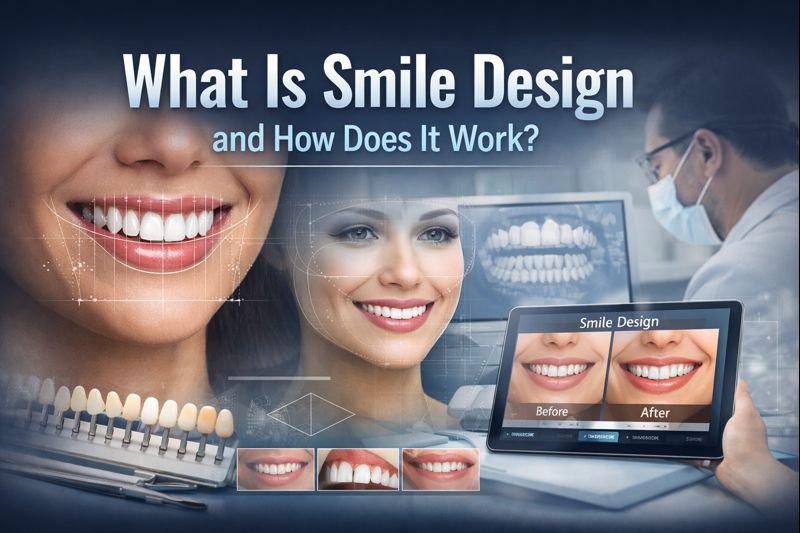
Rather than applying the same “perfect smile” to everyone, smile design considers:
-
Face shape and proportions
-
Lip movement when smiling and speaking
-
Gum visibility
-
Tooth size, shape, and colour
-
Bite alignment and jaw position
This ensures that the final result looks natural and suits the individual, not just a trend.
How Smile Design Works Step by Step
Smile design usually starts with a detailed consultation and diagnostic phase. This allows the dentist to understand both your aesthetic goals and your dental condition.
The process often includes:
-
High-quality photos and videos of your face and smile
-
Digital scans or impressions of your teeth
-
Bite analysis and jaw evaluation
-
Discussion of your expectations and concerns
Using this information, the dentist creates a personalised smile plan that guides the treatment process.
The Role of Digital Smile Design
Digital smile design uses specialised software to visualise potential results before treatment begins. By combining facial photos with digital tooth models, dentists can show you a preview of how your smile may look after treatment.
This helps patients:
-
Understand proposed changes clearly
-
Give feedback before any teeth are treated
-
Avoid surprises after the procedure
Digital tools also improve communication between the dentist, dental lab, and patient, leading to more predictable outcomes.
What Treatments Can Be Part of Smile Design?
Smile design does not mean veneers are always required. Depending on your case, treatment may involve:
-
Teeth whitening
-
Composite bonding
-
Veneers or crowns
-
Gum contouring
-
Minor orthodontic adjustments
The goal is to choose the least invasive option that achieves the desired result.
Who Is Smile Design Suitable For?
Smile design can benefit patients who:
-
Want to improve the appearance of their smile
-
Are unsure which cosmetic treatment is right for them
-
Want a natural-looking result rather than an artificial one
-
Are planning multiple cosmetic procedures
However, underlying issues such as gum disease or bite problems must be addressed first to ensure long-term success.
Why Planning Matters
Skipping the smile design phase increases the risk of:
-
Teeth that look too large, too white, or unnatural
-
Bite discomfort after cosmetic work
-
Shorter lifespan of restorations
A well-planned smile design helps protect both aesthetics and function.
How DentMatch Helps
DentMatch helps patients understand smile design concepts and matches them with clinics that use structured planning and digital tools rather than rushed, one-size-fits-all cosmetic treatments. This allows patients to explore their options confidently before committing.
If you are considering cosmetic dental treatment and want a smile that truly fits you, smile design is a critical first step.