
Smile Design Without Veneers: Is It Possible?
smile design without veneers: Smile design without veneers is often possible when the main concerns involve colour, small chips, spacing, alignment or gum symmetry. The best option depends on healthy tooth structure, the bite and how much change you want.
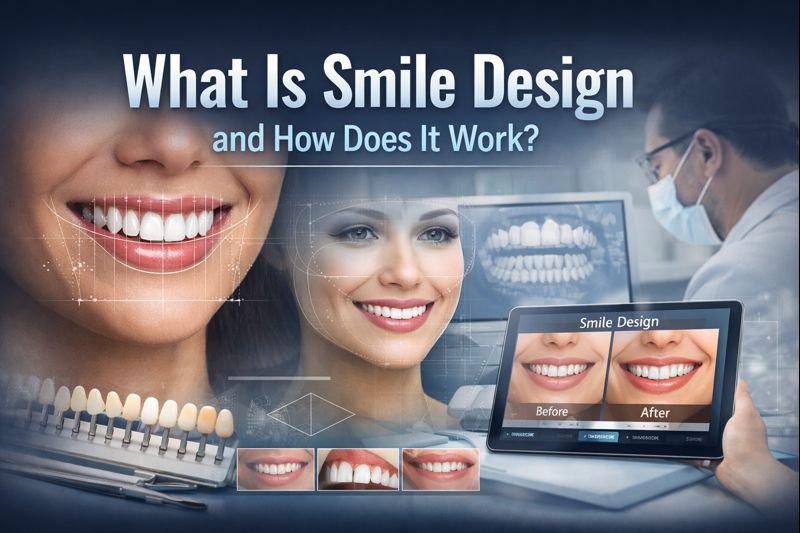
smile design without veneers: Key Points at a Glance
| Question | What to know |
|---|---|
| Colour | Professional whitening can lighten natural teeth but will not whiten existing restorations. |
| Small shape changes | Composite bonding may add material with little or no drilling in suitable cases. |
| Crowding or gaps | Orthodontics can move teeth rather than masking their position. |
| Uneven gums | Periodontal assessment may identify whether gum treatment is appropriate. |
Start With the Problem, Not a Material
First, describe what bothers you in plain language: colour, spacing, edge wear, crowding or gum display. Then, ask which diagnosis explains it. This prevents “veneers” from becoming the automatic answer to every cosmetic concern.
For example, a dark smile with well-shaped teeth may respond to whitening. Meanwhile, a rotated tooth may be better treated by orthodontic movement than by aggressive preparation.
smile design without veneers: Conservative Treatment Options
Composite bonding can repair chips, close selected spaces or change contours. However, it can stain, chip and need polishing or repair over time. Tooth contouring removes a very small amount of enamel and is suitable only for limited changes.
In addition, clear aligners or braces may improve position and bite. Treatment takes longer than a restoration, yet it can preserve more natural tooth tissue.
When Veneers May Still Be Discussed
Veneers can be considered for suitable teeth when colour, form or surface defects cannot be addressed predictably with simpler care. Nevertheless, some veneer designs require enamel preparation, and that change is irreversible.
Therefore, ask how much enamel the dentist expects to remove and whether a diagnostic mock-up is available. Also ask what happens if a veneer chips, debonds or needs replacement later.
Building a Staged Smile Plan
A staged approach may begin with oral health, followed by alignment, whitening and small additive changes. Consequently, you can reassess after each reversible step instead of committing to the largest procedure immediately.
Finally, the shade of crowns or bonding should be planned after whitening has stabilised. Existing restorations will not change colour with whitening gel.
Questions to Ask Before You Decide
- What is the diagnosis for each tooth, and what alternatives were considered?
- What will be removed, added or moved during treatment?
- Which materials, clinicians, appointments and reviews are included?
- What maintenance, possible complications and aftercare should I plan for?
smile design without veneers: Frequently Asked Questions
Can bonding replace veneers?
Sometimes. Bonding is useful for selected additive changes, but it may not provide the same stain resistance or strength as ceramic.
Can crooked teeth look straighter without veneers?
Orthodontics can move teeth. Bonding may disguise very minor irregularities, but it does not correct the underlying position or bite.
Is no-prep treatment always possible?
No. “No-prep” suitability depends on tooth position, available space, enamel and the desired result.
For a wider overview, visit our complete smile design guide. You can also review Turkey teeth prices, risks and inclusions before comparing overseas plans.
Compare Written Treatment Options
Share your goals, smile photo and preferred dates once. DentMatch24 helps you compare suitable clinic responses, inclusions, travel support and aftercare before you choose.
Get a Quote TodaySources and Review Notes
- PubMed: systematic review of digital smile design
- NHS: dental treatments, veneers and implants
- General Dental Council: valid consent and treatment options
Last reviewed: August 2026. This article provides general information, not a diagnosis or personal medical advice. Outcomes and timelines vary. Your treating dental professional must confirm suitability and the final plan.